Reusable Hospital Repeatable Prenatal Care Fetal Heart Rate Monitoring Medical Belt Elastic
Discover our reusable, elastic medical belt for hospital and prenatal care. Designed for repeated fetal heart rate monitoring, it offers precise, comfortable, and hygienic use. Durable and adjustable for reliable performance.
A Reusable Hospital-Grade Fetal Monitoring Belt (also known as a CTG or NST belt) is an essential medical accessory used to secure fetal heart rate (FHR) and uterine contraction (TOCO) transducers to a pregnant woman's abdomen.
Key Product Features
High Elasticity & Comfort: Typically made from medical-grade elastic fabric, such as nylon, spandex, and cotton blends. The stretchable design accommodates different belly sizes throughout various stages of pregnancy without causing excessive pressure.
Durability & Reusability: These belts are designed for multiple uses and are machine-washable (often up to 82°C/180°F) or can be wiped with disinfectants. High-quality versions are tested to withstand over 100,000 stretches.
Adjustable Design: Features integrated buttonholes or snap-on buttons at regular intervals (approx. 50–60mm width) to allow for quick and secure positioning of the probes.
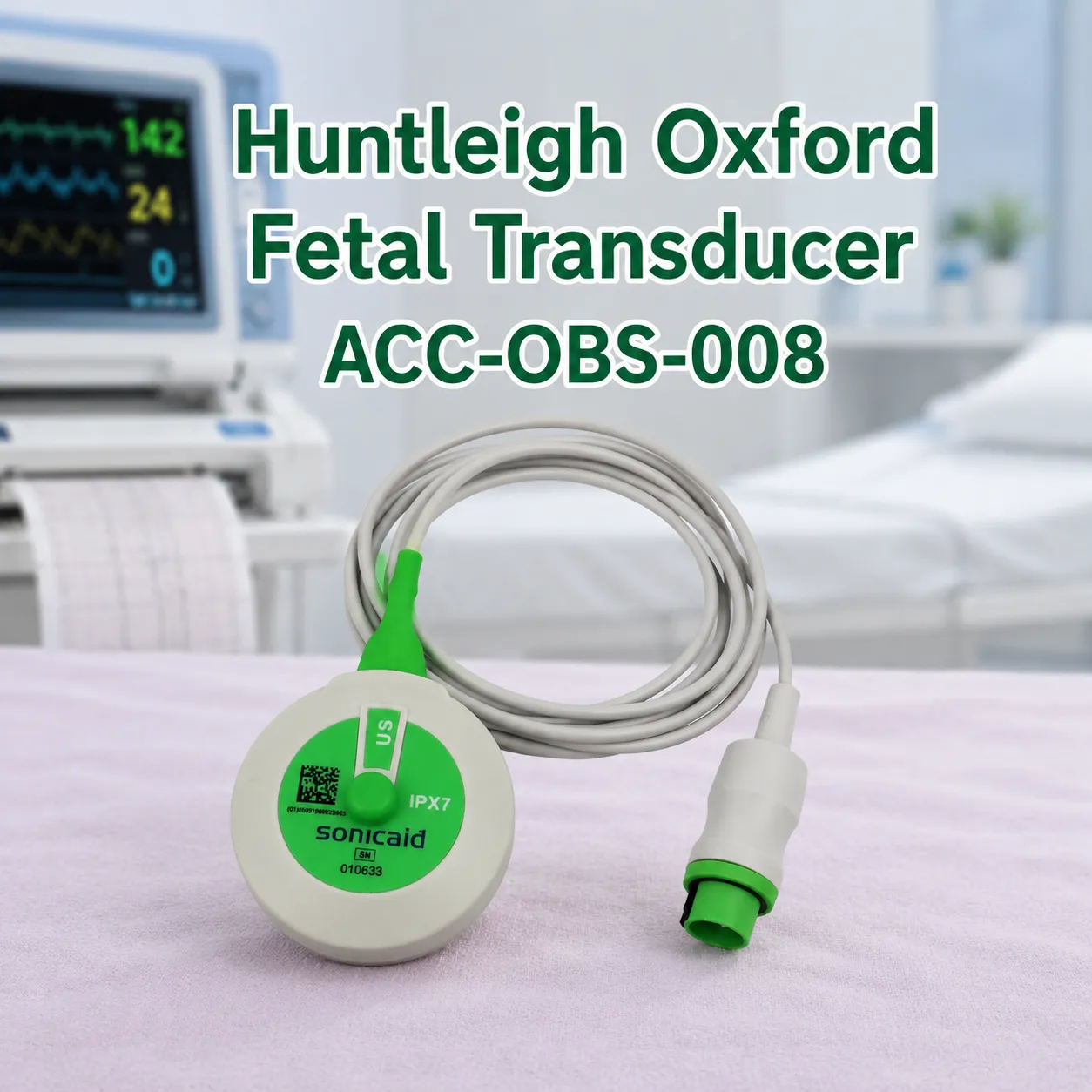
Universal Compatibility: Compatible with most major fetal monitoring equipment brands, including Philips, GE Corometrics, Sonicaid, and Huntleigh.
Latex-Free: Most medical-grade belts are 100% latex-free to prevent skin irritation or allergic reactions during long-term monitoring sessions.
Applications
In-Hospital Care: Widely used in labor and delivery wards for continuous Electronic Fetal Monitoring (EFM) and Non-Stress Tests (NST). Belts are often sold in pairs—Pink for the fetal heart rate probe and Blue for the contraction (TOCO) probe.
Home Use: Expectant mothers (usually after 28 weeks) can use personal belts for remote monitoring to ensure hygiene and avoid cross-infection from shared hospital equipment.
Maintenance Tips
Cleaning: Use mild detergents; avoid bleach which can degrade elastic fibers.
Drying: Air drying is recommended to maintain the belt's tensile strength and longevity.
Inspection: Periodically check for "stretching out" or frayed edges. A loose belt can lead to poor signal quality or "signal loss" during monitoring.